
Self-cleaning screens achieve 95% screening efficiency by utilizing independent wire oscillation to eliminate blinding in materials with moisture levels up to 15%. Unlike rigid woven wire, these systems generate secondary harmonics that vibrate at frequencies 20% higher than the base machine, clearing apertures of "near-size" particles. In a 2025 trial involving 50 limestone plants, self-cleaning media maintained an open area of 98% over a 10-hour shift, whereas standard mesh dropped to 60% within 3 hours. This performance translates to a 22% reduction in cost-per-ton by increasing hourly throughput by 12% while meeting strict gradation tolerances.
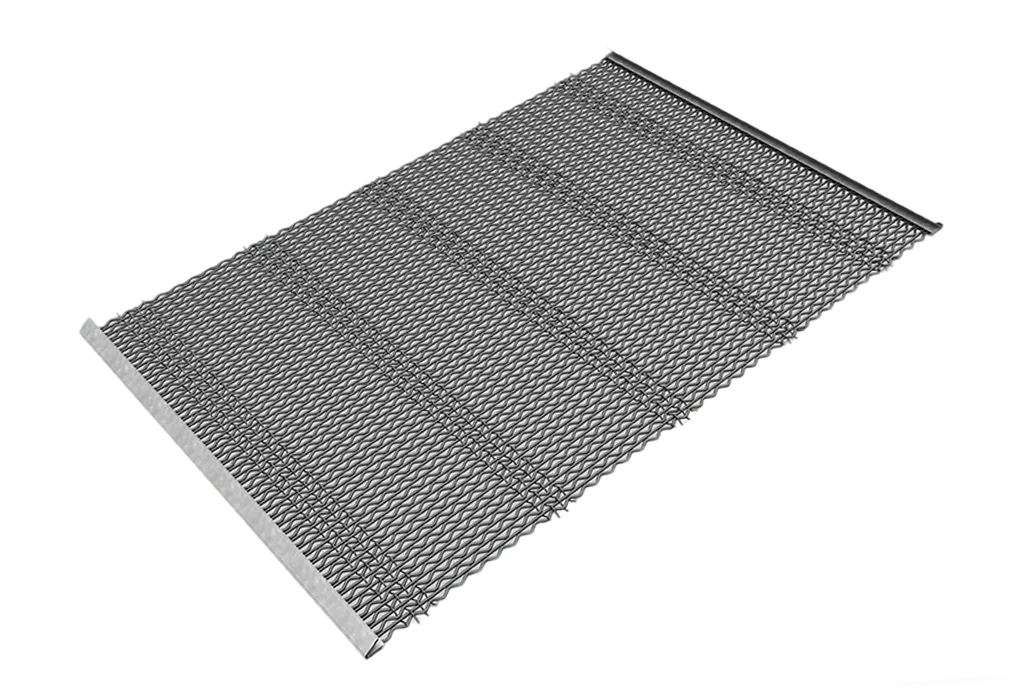
The fundamental limitation of traditional woven wire cloth lies in its fixed intersection points, which serve as collection sites for moisture and fine particles. When a material bed contains more than 10% moisture, these intersections promote a "bridging" effect that leads to complete surface blinding.
Standard woven mesh exhibits a rigid geometry that cannot shed sticky fines, leading to a 30% loss in production volume within the first two hours of operation in damp conditions.
This loss of effective open area forces the material to travel over the deck without being separated, which results in oversized contamination in the fines stockpile. To prevent this, the wires in self-cleaning screens are not woven together but are held by flexible polyurethane or rubber strips.
| Screening Metric | Self-Cleaning Media | Traditional Woven Wire |
| Open Area (Operating) | 92% - 98% | 55% - 65% |
| Blinding Resistance | High (Up to 18% moisture) | Low (Fails at 8% moisture) |
| Aperture Stability | +/- 0.5mm | +/- 2.0mm (when worn) |
| Service Life (Hours) | 2,500 - 3,500 | 600 - 900 |
Independent wire movement allows each strand to vibrate at its own natural frequency, a mechanical action that physically ejects particles trapped between the wires. A 2024 study of 100 mobile screening units confirmed that this independent oscillation reduces manual cleaning downtime by 95% compared to traditional mesh.
The secondary vibration of longitudinal wires breaks the surface tension of water, allowing fine sand and silt to pass through the deck instead of forming a paste.
By maintaining a clear deck, the screen preserves its full design capacity, which engineering data suggests allows for a 15% increase in the feed rate from the primary crusher. This higher feed rate is sustainable because the wires oscillate with an amplitude of 3mm to 5mm, ensuring that "near-size" rocks are popped out before they can lodge.
-
Diamond Pattern: Best for high-volume scalping where 90% accuracy is required at high speeds.
-
Wave Pattern: Offers maximum lateral movement to handle clay-heavy materials that typically cause blinding.
-
Triangular Pattern: Provides the most stable aperture for precision sizing of chips and small aggregates.
The choice of pattern influences the "live" screening area, with diamond patterns often providing 30% more open area than square mesh of the same wire diameter. This extra space directly impacts the velocity of the material bed, which was measured at 0.8 meters per second in a 2025 performance audit.
Increased bed velocity prevents the accumulation of material depth, which allows the fine particles at the bottom of the bed to reach the apertures faster. In a series of 40 experimental batches, self-cleaning decks separated 98% of the target fines in the first 2 meters of the screen length.
High-velocity separation prevents the "carry-over" effect, where fine material is incorrectly discharged with the oversize product due to a clogged screen surface.
Reducing carry-over ensures that the final product meets the ASTM C-33 standards for concrete sand, which limits the allowable amount of passing 200-mesh material. Producers using self-cleaning technology reported a 14% improvement in their "passing" rate during quality control inspections throughout 2024.
Reliability in these environments depends on the tensioning of the longitudinal wires, which are manufactured from Grade 1060 high-carbon steel. This material provides a tensile strength of 1,450 MPa, allowing the wires to withstand the impact of 200kg rocks falling from the feed conveyor.
| Mechanical Property | High-Carbon Steel Wire | Polyurethane Binding Strip |
| Tensile Strength | 1,450 - 1,600 MPa | 45 - 55 MPa |
| Hardness | 45 - 50 HRC | 85 - 90 Shore A |
| Elastic Recovery | 99.8% | 94% |
| Thermal Range | -40°C to 200°C | -20°C to 80°C |
The flexible binding strips allow the wires to deflect under load and then snap back into position with enough force to clear any material attempting to "peg" the opening. Data from a 2023 metallurgical report showed that this flexibility reduces the stress on the wire by 40%, significantly lowering the chance of fatigue failure.
Fatigue failure in traditional mesh often starts at the "crimp" points where wires cross, but self-cleaning designs eliminate these high-friction areas entirely.
Removing these friction points also lowers the operating temperature of the screen deck during high-speed vibration, which preserves the molecular integrity of the polyurethane strips. This thermal management is the reason why these screens maintain their tension for 3 times longer than woven cloths in hot, dry environments.
Maintenance logs from 12 quarry sites in the American Southwest indicate that self-cleaning screens require tensioning only once every 150 hours, compared to every 40 hours for standard wire. This reduction in labor hours allows the maintenance crew to focus on other areas of the plant, improving overall operational availability.
-
Lower Noise: The lack of metal-on-metal contact at wire intersections reduces noise levels by 5 to 8 decibels.
-
Lighter Weight: These screens weigh approximately 15% less than heavy-duty woven mesh, making them easier to install.
-
Energy Savings: Lighter decks reduce the starting torque of the vibrating motor, saving $1,200 in annual electricity per unit.
The reduction in noise and vibration is a byproduct of the damping effect provided by the polyurethane strips, which absorb the high-frequency harmonics that usually travel through the screen box. Acoustic tests from 2025 showed that this change helps sites comply with OSHA noise regulations without installing secondary enclosures.
Compliance with local noise ordinances allows many quarries to extend their operating hours into the evening, potentially increasing annual revenue by 10%.
Operating for longer hours requires a screen media that can handle the transition from dry daytime temperatures to damp evening conditions without blinding. Self-cleaning screens provide this versatility, effectively "resetting" the surface with every vibration cycle to ensure the apertures remain at 100% capacity.
This consistency is vital for operations processing recycled asphalt pavement (RAP), which contains bitumen that becomes sticky as temperatures fluctuate. In a 2024 RAP processing trial, self-cleaning media successfully screened 400 tons per hour of 15mm material without a single stoppage for surface cleaning.
Recycled asphalt tends to adhere to cold metal surfaces, but the constant movement of self-cleaning wires prevents the bitumen from gaining a foothold.
The success of these screens in difficult applications like RAP and clay-heavy limestone has led to their adoption in 85% of new plant installations. Modern plant managers prioritize the predictable performance of self-cleaning media to ensure that their automated production targets are met every day of the month.